
Last week, I tried to grab a cup of coffee at Basha Coffee in Ginza—but even on a weekday afternoon, the line was impossibly long. With the café open until 9 PM, I plan to try again when the timing is right. While waiting, I found myself curious: how is coffee actually enjoyed in Morocco, the country where this brewing tradition originally took root?
In this feature, we explore Morocco’s evolving coffee culture, key café players, consumer trends, Japanese cafés making waves, and the opportunities—and challenges—for Japanese brands looking to expand abroad.
Moroccan Bacha Coffee Comes to Japan: Strategy and Goals

The Rise of Coffee in Morocco
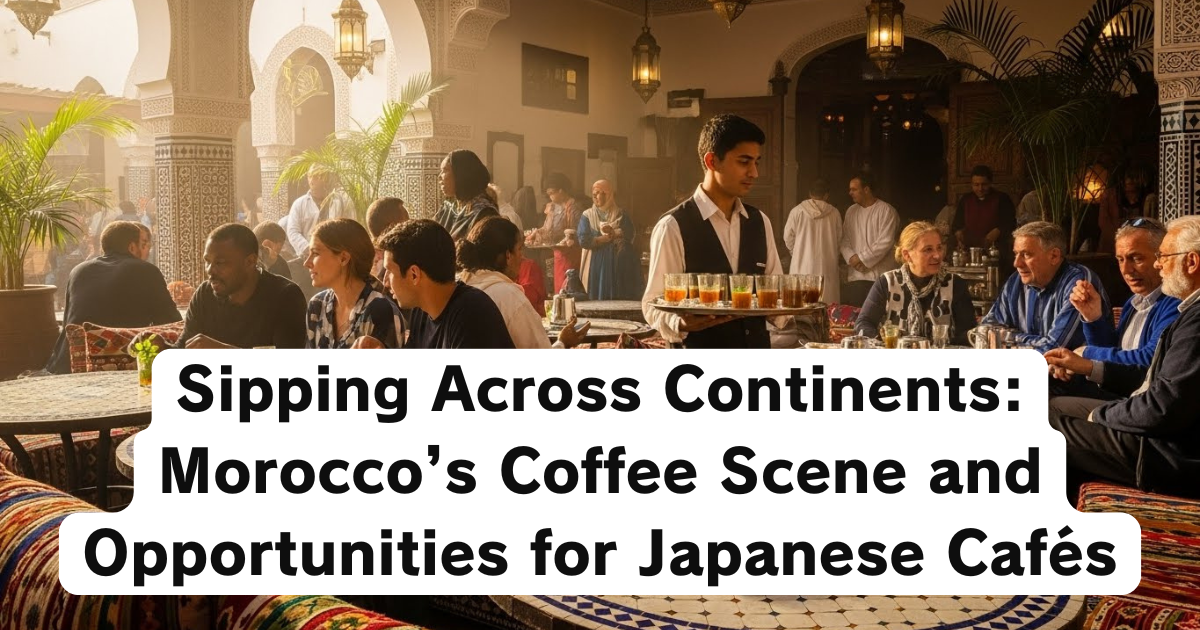
Morocco is world-famous for mint tea, but coffee is quietly making a splash—especially in its urban hubs. Tourism, city living, and a younger, trend-conscious population are driving demand for stylish cafés, Instagram-worthy drinks, and spaces designed for socializing rather than just taking a break.
Morocco: Importer, Not Producer
Unlike coffee giants such as Brazil or Colombia, Morocco imports almost all of its coffee—about 58,000 tons per year. Robusta beans make up roughly 80% of imports, while Arabica (the premium variety) accounts for 20%. Major suppliers include Brazil, Colombia, Costa Rica, Vietnam, and Indonesia.
Rising global coffee prices affect the market, yet consumption continues to grow—a promising sign for both local and international brands.
Consumer Trends Shaping the Market
- Urban youth love ambiance: Stylish cafés with cozy interiors are a must.
- Social experiences matter: Consumers seek interactive and visually appealing menus.
- Cafés as social hubs: The focus is less on quick coffee breaks and more on lingering with friends or colleagues.
Major Café Players in Morocco
Local Favorites
- Cafés Carrion: A long-standing Moroccan brand with numerous locations across the country.
International Chains
- Starbucks: Multiple locations, open late, offering a familiar global experience.
- Costa Coffee: Present through franchises with plans for 30–40 outlets.
- Paul: Bakery-café chain combining fresh pastries with coffee, operating several locations.
Japanese Cafés Making Their Mark
The Kyoto-based specialty coffee brand % Arabica has already entered Morocco, operating two stores. Known for high-quality beans and immersive café experiences, the brand demonstrates how Japanese cafés can differentiate themselves even in competitive markets.
Opportunities and Risks for Japanese Brands
Japan’s café culture is mature, with many brands exploring international expansion. Morocco presents a growing market with urban demand, a preference for high-value coffee, and a tourism-driven audience—making it ripe for Japanese entrants.
Opportunities
- Rapidly growing urban demand
- Interest in premium and specialty coffee
- Tourism-friendly market
Challenges
- Fierce local and international competition
- Vulnerability to fluctuating import costs
- Cultural adaptation and local consumer habits
Key Strategies for Success
- Target urban centers and tourist hotspots: Casablanca, Marrakech, and Rabat are prime locations.
- Differentiate through quality and experience: Specialty coffee and experiential services can set brands apart.
- Leverage local partnerships: Franchises or joint ventures can help navigate the market.
Final Sip
Morocco’s coffee culture is evolving, blending tradition with modern tastes. For Japanese cafés, the opportunity to expand is real—but success depends on quality, strategy, and collaboration with local partners. For coffee lovers and business-minded entrepreneurs alike, Morocco is a market worth watching.
Note: Photos are for illustrative purposes only and may not accurately represent the actual products or stores.
コメント