
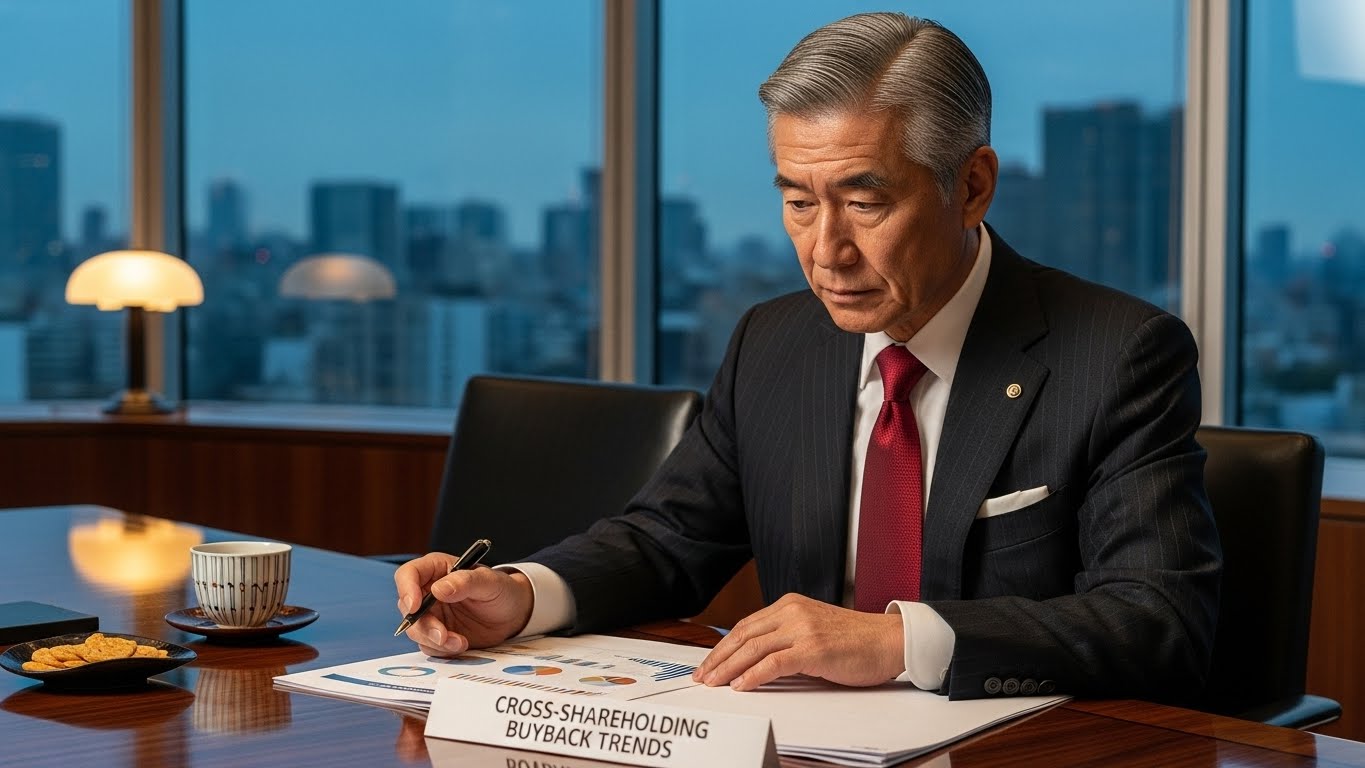
Japan is approaching a major turning point in corporate governance.
Recently, it was reported that the Banks’ Shareholdings Purchase Corporation, which had served as a buyer of banks’ policy shareholdings, will stop accepting new share purchases. This means that banks and companies can no longer rely on a public backstop to dispose of cross-shareholdings.
While much attention has been paid to the impact on banks, companies, and capital markets, one group is quietly but significantly affected: corporate advisors (soudanyaku).
This article explains who corporate advisors are, why they were rarely questioned in the past, and how investor expectations are now reshaping their role.
What Are Policy Shareholdings in Japan?

Policy shareholdings refer to shares held by banks or companies not primarily for investment returns, but to maintain long-term business relationships.
For decades, these holdings created:
- Stable shareholder structures
- Limited pressure from capital markets
- Strong internal continuity
With the end of the buyback scheme, companies are increasingly forced to reduce such holdings, fundamentally changing ownership structures and governance dynamics.
Who Are Corporate Advisors(Sodanyaku)?

In many Japanese companies, corporate advisors are:
- Former CEOs or chairpersons
- Long-serving executives with deep internal influence
They typically:
- Hold no legal decision-making authority
- Bear no formal management responsibility
- Provide advice to current executives, often informally
In practice, they have often influenced major decisions behind the scenes—without being accountable to boards or shareholders.
This structure has long been considered a uniquely Japanese management tradition.
Why Corporate Advisors(Sodanyaku) Were Rarely Questioned in the Past
When policy shareholdings were common, major shareholders were typically:
- Banks
- Business partners
- Group companies
These shareholders prioritized:
- Relationship stability over short-term returns
- Non-interference in management
- Respect for internal customs
As a result, the presence and influence of corporate advisors were rarely scrutinized.
What Changes After the End of Buybacks?

1. Shareholder Composition Shifts
As policy shareholdings decline, ownership increasingly shifts toward:
- Institutional investors
- Foreign investors
- Market-based individual shareholders
These investors ask different questions:
- Who actually influences decisions?
- Is governance transparent?
- Does this structure enhance corporate value?
Corporate advisors can no longer remain invisible.
2. Oversight and Advisory Functions Are Re-evaluated
Previously, advisors’ value was often based on:
- Experience
- Personal networks
- Past success
Going forward, investors expect:
- Clear contributions to strategy
- Advice aligned with value creation
- Accountability, even without formal authority
3. Decision-Making Transparency Becomes Critical
Historically, Japanese firms often operated with:
- Formal decisions made by boards
- Informal influence exercised elsewhere
From an investor perspective, this is now seen as a governance risk.
Executives must be able to explain who made decisions and why.
4. Changing Investor Expectations
Investors are no longer interested in:
- Titles
- Seniority
- Tradition
They care about:
- Growth strategy
- Capital efficiency
- Effective governance
For corporate advisors, existence alone is no longer justification. Their impact must be clear and defensible.
5. Required Skill Sets for Corporate Advisors
Modern corporate advisors are expected to have:
- A strong understanding of capital markets
- An investor-oriented mindset
- Logical, transparent advisory skills
- Awareness of their influence and limits
Past achievements alone are no longer sufficient.
Are Corporate Advisors(Sodanyaku) Now Subject to Shareholder Evaluation?
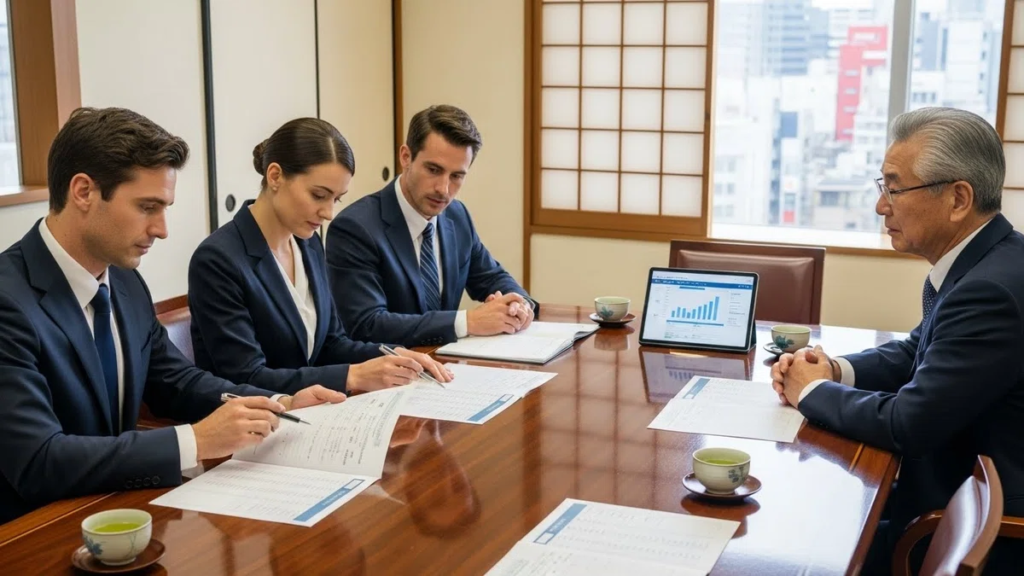
Indirectly, yes.
While advisors are not statutory directors, investors increasingly assess:
- Whether hidden influence exists
- Whether governance structures are explainable
- Whether advisory roles enhance or undermine value
From a global investor’s perspective, a role that “influences decisions without responsibility” is difficult to justify.
The evaluation is not of individuals, but of the position itself.
Companies That Have Reduced or Eliminated Advisor(Sodanyaku) Roles
Several leading Japanese companies have already moved ahead:
- Sony Group – Abolished advisor and counselor roles to clarify accountability
- Hitachi – Reduced advisory positions in line with global governance standards
- Toyota – Limited the scope and influence of advisors amid governance reforms
Their common approach: prioritizing explainable governance over tradition.
Conclusion

The end of policy shareholding buybacks is more than a technical market change.
It marks the decline of long-standing informal arrangements that once supported Japanese corporate stability. Corporate advisors now stand at a crossroads—from protected insiders to roles that must be justified, transparent, and aligned with shareholder value.
In today’s Japan, even those without formal authority can no longer remain outside investor scrutiny.


コメント