

In Japan, corporate restructuring often involves spin-offs, where a single legal entity is divided into multiple companies.
The conventional assumption is straightforward:
the parent company retains the core business, while non-performing or divestment-ready operations are placed into subsidiaries.
However, in practice, this relationship can reverse.
In certain cases—especially during periods of downsizing or corporate retrenchment—the substance of the business is gradually transferred to subsidiaries, while the parent company is left largely intact in form but hollow in function.
In English-speaking contexts, a company that remains after its business, assets, and people have been stripped away is often described as an Empty Shell Company.
This term refers to an entity that retains its legal status, listing, or contractual role, but no longer contains the economic or operational core of the business.
This article examines this structure—here referred to as a “reverse spin-off”—in which the parent company is preserved formally while the real business migrates to subsidiaries.
This article analyzes general corporate restructuring patterns.
It does not evaluate or describe any specific company, and does not imply that any particular organization fits this structure.
1. What Is a Spin-Off? (Textbook Definition)
A spin-off is a corporate strategy in which a company separates part or all of its business into an independent legal entity.
Common forms include:
- New Company Split: creating a new entity and transferring a business unit
- Absorption Split: transferring operations to an existing subsidiary or third party
- Holding Company Structure: converting operating companies into subsidiaries under a holding company
Officially, spin-offs are often justified by terms such as focus, agility, or governance enhancement.
2. Typical Reasons Companies Use Spin-Offs
Spin-offs are commonly used to:
- Accelerate decision-making in growth businesses
- Isolate or dispose of loss-making operations
- Facilitate M&A or asset sales
- Ring-fence legal, regulatory, or financial risks
- Separate labor costs and employment terms
In most cases, the logic is simple:
👉 the parent remains, the subsidiary is sold or cut.
3. When the Relationship Reverses
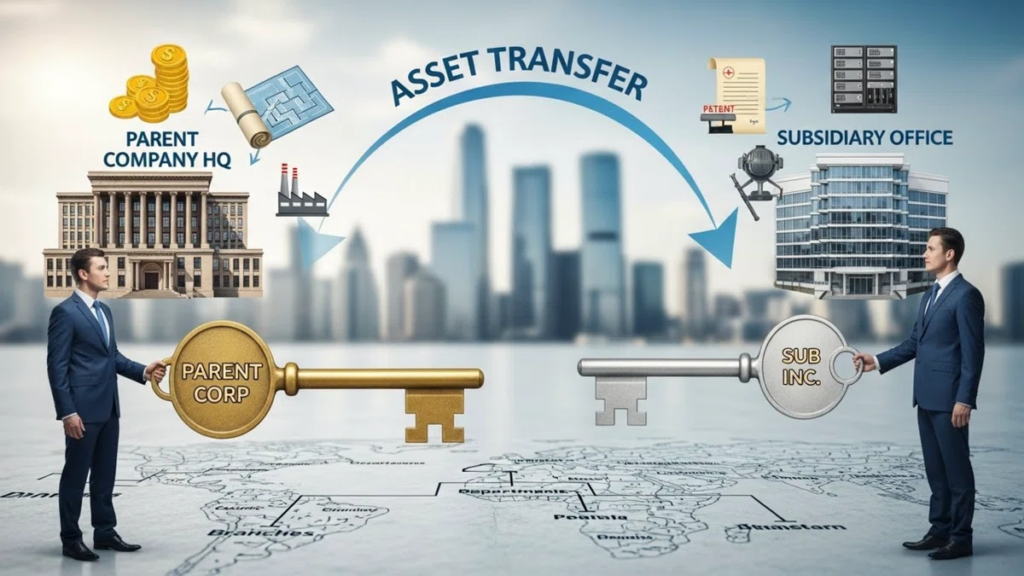
In restructuring or contraction phases, particularly in mature markets like Japan, a less visible pattern can emerge.
In a reverse spin-off:
- The valuable businesses and talent are concentrated in subsidiaries
- The parent company retains liabilities, legacy contracts, and excess staff
Typical outcomes:
- Parent company: weakened, administrative, cost-heavy
- Subsidiary: revenue-generating, growth-oriented, operationally central
Legally, the subsidiary remains a “child.”
Economically, it becomes the real core of the group.
4. The Parent Is Not Always the Core
Many stakeholders implicitly assume:
Parent = core business
Subsidiary = peripheral unit
From a legal or accounting standpoint, however, the “core” is defined by where value resides:
- Where profits are generated
- Where talent, technology, and customers are concentrated
- Where future investment is directed
When these elements move to subsidiaries, the economic center of gravity shifts with them.
5. Why Hollow Out the Parent Instead of Cutting the Subsidiary?
In downsizing scenarios, how a business is separated can matter more than what is separated.
While selling or liquidating subsidiaries is the textbook option, companies sometimes hollow out the parent instead—because subsidiaries can be more adaptable survival vehicles.
Subsidiaries Are Easier to Adjust
Compared with parent companies, subsidiaries often allow:
- Easier justification of lower-cost structures
- Greater flexibility in pricing negotiations with clients
- Lower and redesigned compensation frameworks
- Faster adoption of new HR systems and hiring models
By concentrating operations in subsidiaries, management gains more levers to restore profitability.
6. Not “Cutting” the Parent, but Turning It into a Shell

In practice, companies rarely dissolve the parent immediately.
Instead:
- Operations, talent, and cash flow move to subsidiaries
- The parent retains the brand name or contract-signing role
- Once emptied, the parent is quietly merged, downsized, or rendered nominal
This is less about elimination than controlled hollowing.
7. Why Parents Are Rarely Fully Dissolved
Fully dissolving a parent company can trigger:
- Concentrated legal and shareholder scrutiny
- Political and regulatory pressure
- Media and public backlash
As a result, many firms leave the parent legally intact—even when its economic role has largely vanished.
The outcome is a formally existing but substantively empty parent company.
8. What Typically Happens Next
Once operations are transferred:
- Headcount at the parent continues to shrink
- “New initiatives” at the parent are quietly terminated
- Remaining functions are absorbed into subsidiaries or holding entities
- The parent is merged, liquidated, or left as a nominal shell
The parent becomes a structure whose historical role has ended.
9. Spin-Offs as Endgame Strategies
Spin-offs are often framed as growth strategies.
That framing is incomplete.
- Growth phase: cut subsidiaries to focus
- Contraction phase: hollow out the parent to survive
The same legal tool can signal entirely opposite strategic realities.
10. Conclusion
Spin-offs are not about creating more companies.
They are about deciding where value lives.
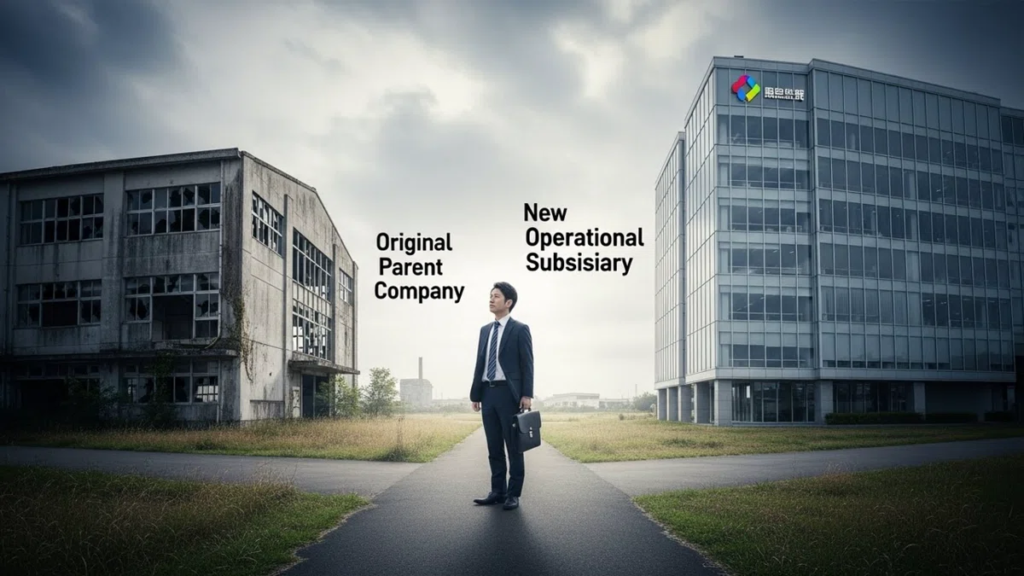
In restructuring phases, the entity that disappears is not always the subsidiary.
Sometimes, the parent company itself becomes the one that is quietly left behind.
Recognizing this structural reversal is critical—for investors assessing risk, and for employees making career decisions.
Thanks for always supporting me! If you like my content, a cup of coffee’s worth of support would mean a lot.

コメント