
Japan’s corporate world was once known for stability over efficiency.
Cross-shareholdings were common, management rarely faced pressure from shareholders, and companies tended to accumulate cash rather than return it.
That changed in the early 2000s.
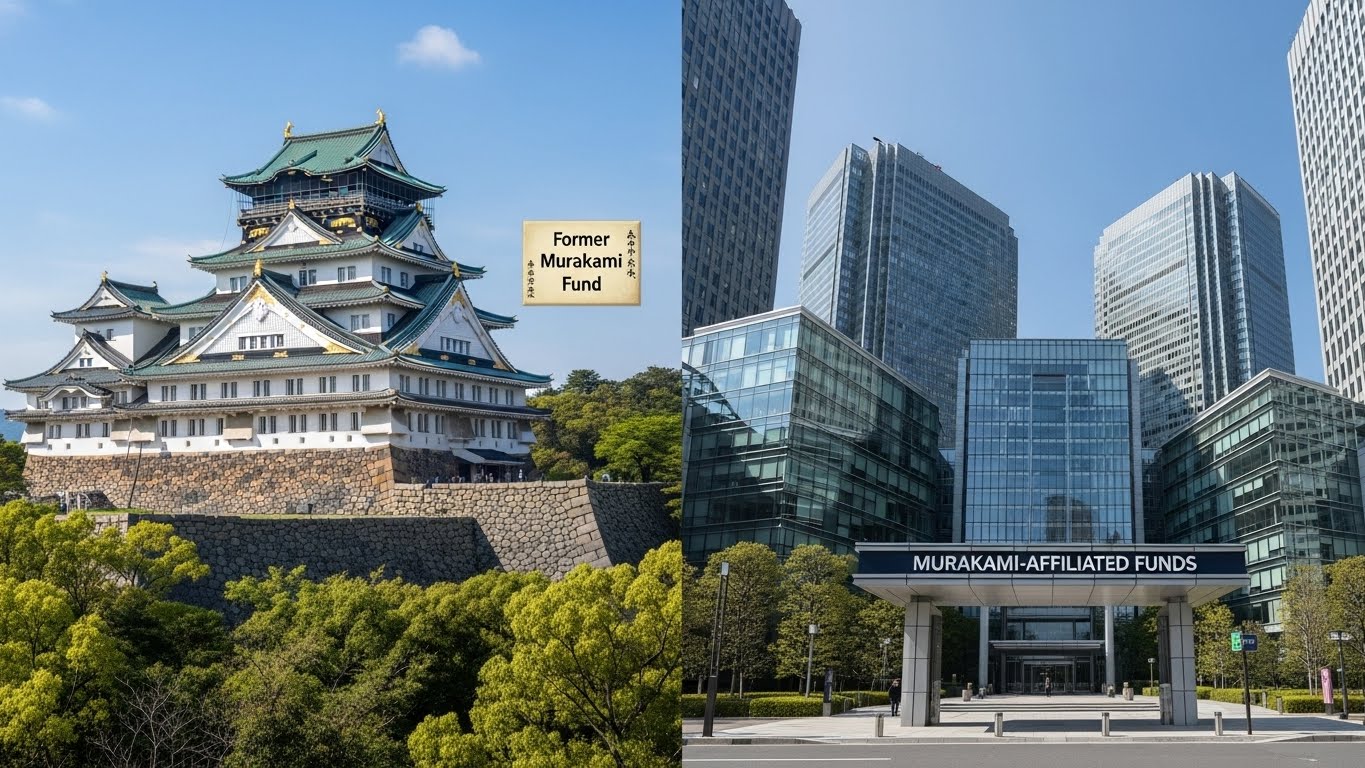
At the center of that shift was what later came to be known as the Former Murakami Fund.

What Was the Former Murakami Fund?
The Former Murakami Fund refers to MAC Asset Management, founded by Yoshiaki Murakami, one of Japan’s earliest and most controversial activist investors.
At the time, Japanese companies were largely insulated from shareholder influence.
Murakami challenged that norm head-on.
The fund acquired large stakes in well-known companies such as Fuji Television, Nippon Broadcasting, and Hanshin Electric Railway—firms with strong brand recognition and significant asset value.
After investing, Murakami publicly demanded:
- Higher dividends
- Share buybacks
- More efficient use of excess assets
His core belief was simple and uncompromising:
“A company belongs to its shareholders. Management is merely their agent.”
While this idea sounds standard today, it was deeply unsettling in Japan two decades ago.
Why Is It Called the “Former” Murakami Fund?
In 2006, Murakami was convicted in an insider trading case related to Nippon Broadcasting shares.
Following the ruling, the original fund effectively dissolved.
As a result, the term “Former Murakami Fund” is now used to describe Murakami’s original activities in the early 2000s.
So What Is the “Murakami Fund” Today?

When the media refers to the “Murakami Fund” today, it usually does not mean the original entity.
Instead, it points to a group of Murakami-affiliated funds, involving:
- Murakami’s daughter
- Former associates
- Related investment companies
Legally and organizationally, these funds are separate.
However, the investment philosophy remains clearly inherited, which is why they are collectively labeled “Murakami Fund” for convenience.
Recent attention—such as involvement in Fuji Media Holdings—has brought the name back into headlines.
What Has Been Inherited?
Despite the differences, the core ideas are consistent:
- A strong focus on shareholder value
- Attention to Japan’s low capital efficiency
- Calls for dividends and share buybacks
In short, the belief that “corporate value can—and should—be unlocked” has not changed.
Is Shareholder-First Capitalism Always Right?

From a capitalist perspective, prioritizing shareholders makes sense.
They provide capital and take risk.
But companies do not generate value on capital alone.
They rely on employees who contribute labor, expertise, and time.
Japanese companies historically believed they protected employees through lifetime employment and generous benefits.
Yet when conditions worsen, early retirement programs based on age or uniform criteria are often introduced—revealing an underlying view of employees as costs rather than long-term assets.
Executives, especially at the board level, are structurally inclined to see people as numbers.
That is precisely why the debate should not be framed as shareholders versus employees.
The real challenge is building business models and decision-making frameworks that:
- Maintain capital discipline
- Support stable employment
- Treat human capital as a source of long-term value
Balancing shareholder returns with employee sustainability is not indulgence—it is strategy.
Final Thoughts

The Former Murakami Fund forced Japanese companies to confront a question they had long avoided:
Who is the company really for?
While Murakami-style activism was once seen as radical, many of its ideas are now market standards.
At the same time, an extreme focus on shareholder primacy alone cannot sustain corporate value.
The renewed attention on Murakami-affiliated funds suggests that Japan has entered a new phase—one where the balance between capital efficiency and human value is no longer optional, but unavoidable.
この記事が参考になったと感じていただけたら、コーヒー1杯分のご支援をいただけると励みになります。

コメント